What a branding diploma taught a software engineer
· 6 min read
I'm a software engineer. My natural reflex for any problem is to open the editor and start building. But since I launched Acceso, an event ticketing platform, I've had to do everything: development, QA, accounting and, above all, marketing. That's where I learned something many devs learn late: a good product doesn't sell itself.
That's why I enrolled in the Brand Development and Positioning diploma program (Diplomado en Desarrollo y Posicionamiento de Marcas) at the Instituto Tecnológico de Santo Domingo (INTEC), taught by Lauri Salomon. I just finished it. These are the ideas that stuck with me most, and how I apply them to my work.
1. If I can't see it, I can't buy it
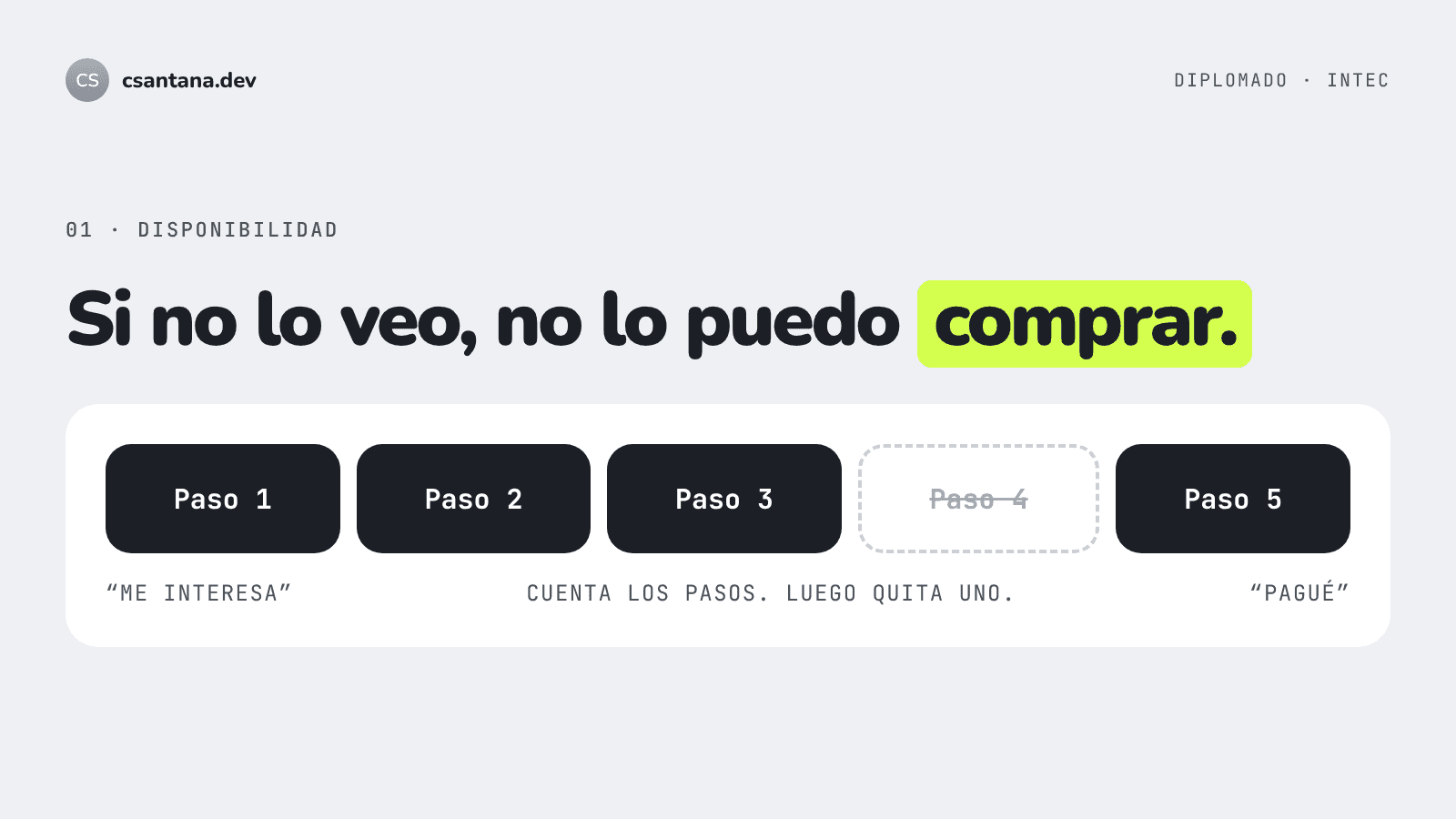
One of the first modules covered availability: the idea that a brand grows when it's very easy to buy for as many people as possible. We've all gone to buy something, couldn't find it and walked out with another brand without a second thought.
In the course we did a simple exercise: count how many steps it takes a shopper to reach your product from the moment they walk into the store. In software, that's a funnel. Every screen, every form field and every redirect between "I'm interested" and "done, I paid" is a point where someone can leave. As a QA engineer, I've spent years testing flows to make sure they work. The diploma made me test them for being short, too.
2. Your digital presence is availability too
Online availability isn't just having an online store. It's being where your customer looks for you. An entrepreneur lives on Instagram and WhatsApp; a B2B company, on LinkedIn and its website; an institution, on its official site or its app.
We also looked at what makes a product show up in a search: a title with the terms people actually type, good images, clear descriptions and reviews from other customers. For anyone who builds websites, that's SEO, content and social proof. It isn't decoration: it's the difference between existing or not for the person looking for you.
3. Start with why
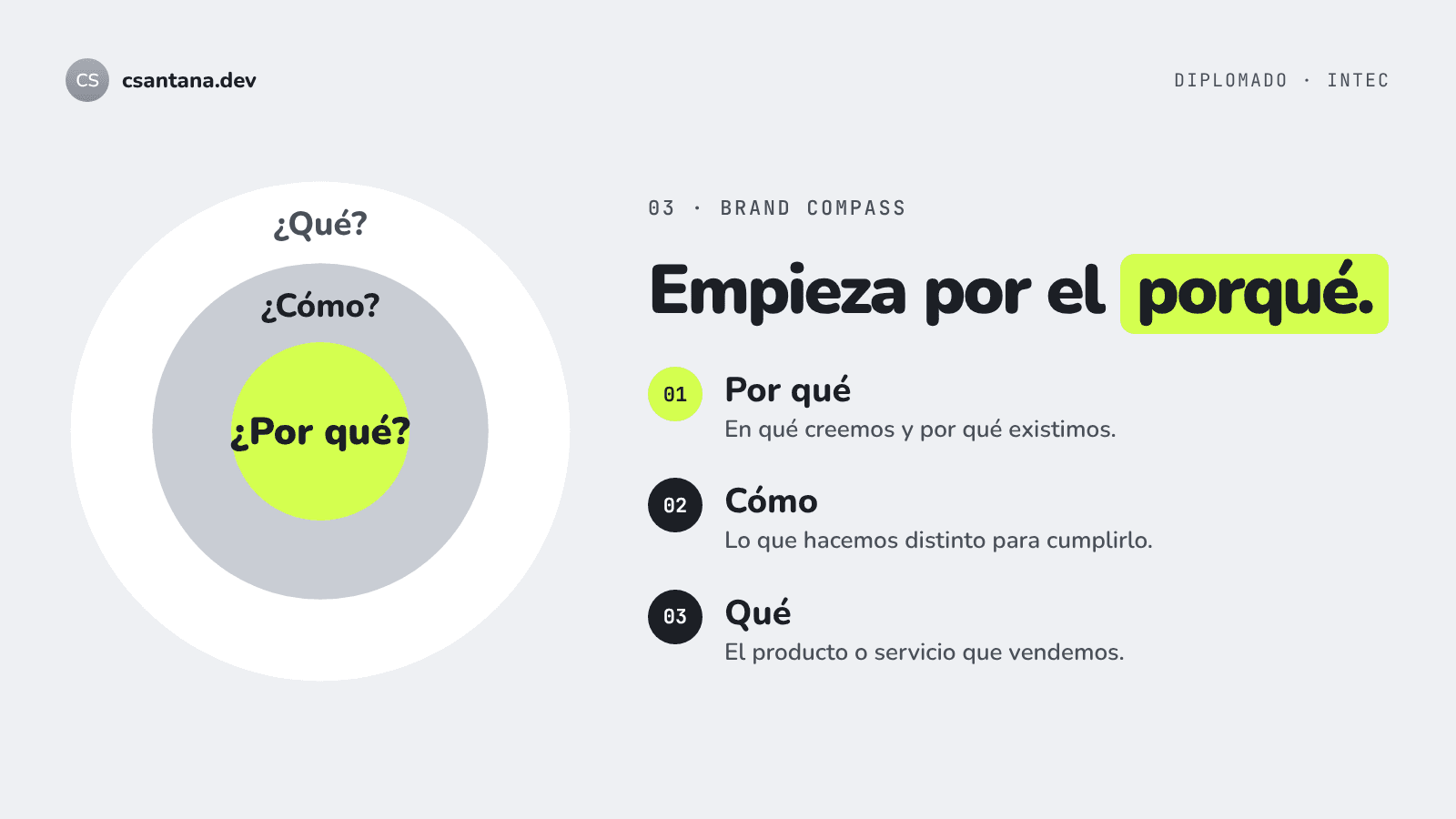
The Brand Compass module started from the Golden Circle. Most brands communicate from the outside in: what they sell, how they do it and, if there's room left, why. The ones that connect do it the other way around.
The Brand Compass breaks that idea into concrete pieces: the universal human need behind the brand, the purpose (why we exist beyond making money), the belief, the benefit the customer feels and the reason to believe us. Doing this exercise for Acceso forced me to stop describing it as "a ticket sales platform" and to think about what it really solves for organizers and attendees.
4. Every brand needs a story
Another idea I liked was the brand myth: the story that explains why you exist. We looked at three possible structures. Discovery: you found a better way to do something. Rebellion: you challenge a norm. Personal transformation: something you lived through changed you, and the brand was born from it. The story doesn't have to be epic, but it does have to be aspirational, and it has to be true.
5. An insight is written "I need…, but…"
In Marketing Intelligence we learned that an insight is an internal need or motivation of the customer, and that the most useful way to write it is the way they'd say it: "I need…, but…". The first part is the desire; the second, the tension holding it back.
Insights don't come from assuming. They come from observing and asking: social media comments, reviews, short interviews, watching how people buy. That sounded very familiar. In QA the rule is the same: don't assume something works, validate it. The diploma gave me the equivalent for the customer side: don't assume what they need, observe.
6. Not everything that makes you different is a differentiator
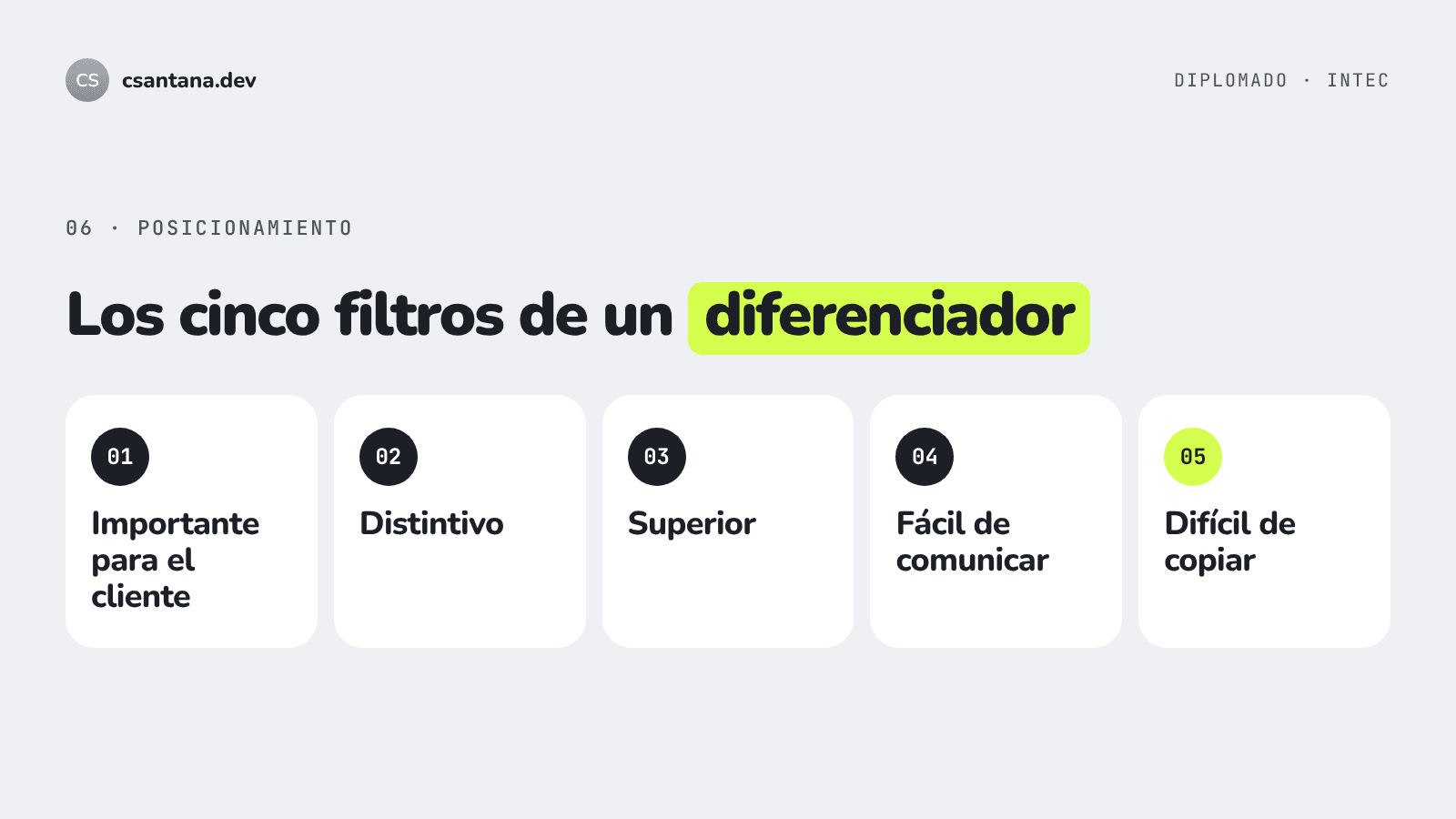
In the marketing plan class we evaluated differentiators with five filters: Does it matter to the customer? Is it distinctive? Is it superior? Is it easy to communicate? Is it hard to copy?
For someone who builds software, the last filter hurts. Almost any feature can be copied in weeks. What's hard to copy is the complete experience, the relationship with customers and the trust built up over time. That's where positioning has to live.
7. Communities, not audiences
The media module made one thing clear: attention is scarce and people dodge advertising. The model shifted from "first I communicate, then I see who I reached" to "first I connect, then I communicate." The right question isn't what a community can do for your brand, but what your brand can do for that community.
We also saw that every platform has its own language. Consistency doesn't mean posting the same thing everywhere; it means being recognizable everywhere.
8. AI as a draft, not a strategy
As someone who works with AI every day, I liked that the course was clear: AI boosts creativity but doesn't replace it. It's useful for finding patterns in comments, testing ideas and saving time. What you don't hand over to it is strategy, checking what it says and your own voice, because the risk is ending up sounding like everyone else.
9. If it doesn't fit in a minute, it isn't clear
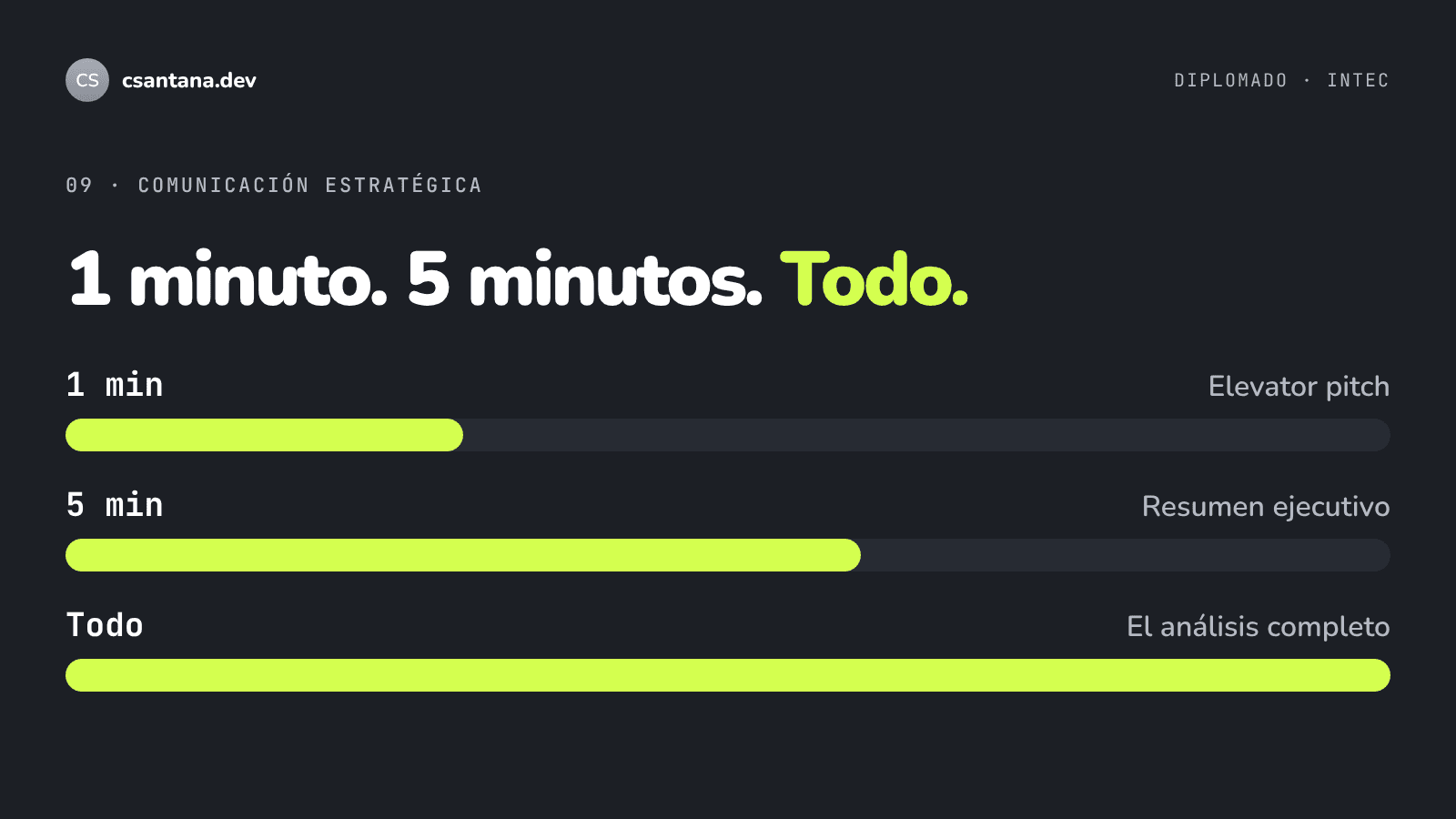
The last module was about strategic communication. The rule: you should be able to explain your message in three versions: a one-minute elevator pitch, a five-minute executive summary and the full analysis. The more senior the audience, the less time you have. You start with the conclusion, then come the arguments, and every data point gets the question "so what do we do with this?"
It's good advice for pitches, for client proposals and, honestly, for any pull request.
What I'm taking away
Building well is half the job. The other half is getting people to find you, understand you and choose you. This diploma gave me a language and a method for that second half, and I'm already applying it at Acceso and in the projects I build for clients.
If you're launching a product and want your code and your brand playing on the same team, get in touch.